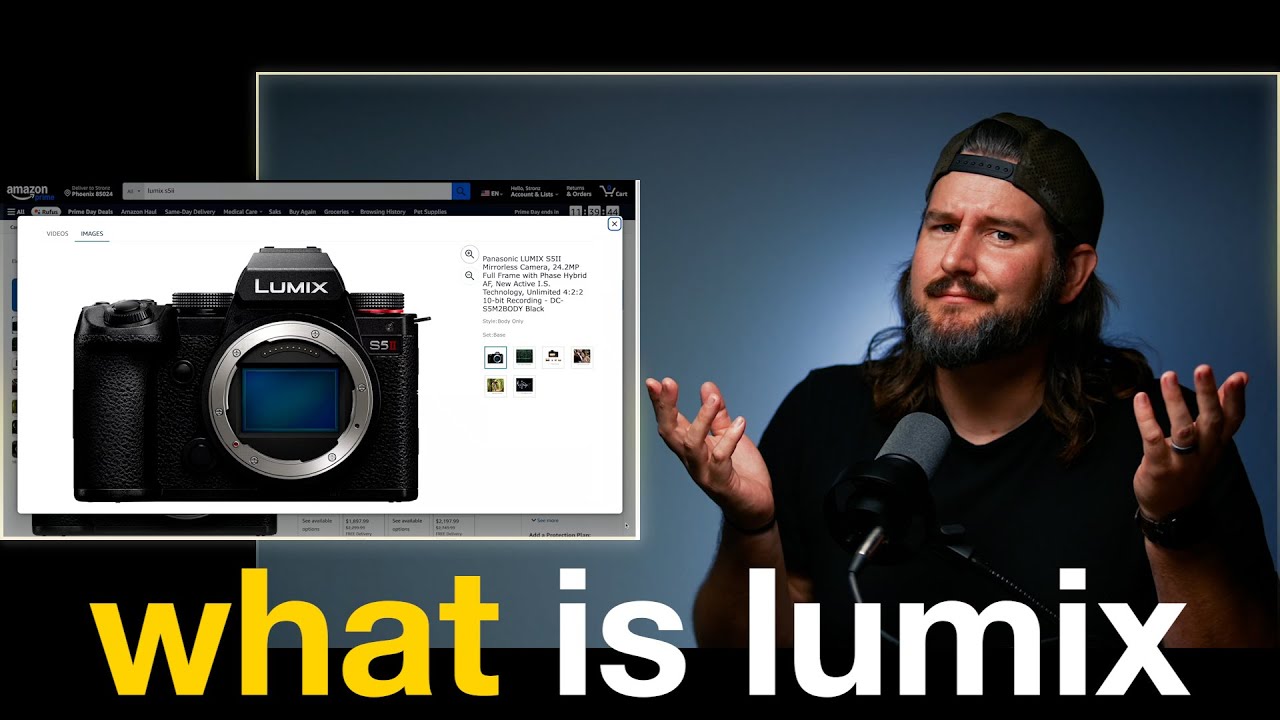
What Does the Lumix Brand Mean to You?

Brand meaning drives buying decisions before specs ever do
When you hear Nike, Adidas, Canon, Sony, or RED, you already feel something before you compare a single line item on a spec sheet. You probably picture who uses it, where it shows up, and what kind of work gets made with it. That emotional shorthand is not fluff. It is positioning, and it influences whether you trust a system enough to buy into it.
The harder question is what you feel when you hear Lumix. You can list features all day, but if the brand signal is fuzzy, your buying confidence stays fuzzy too. That is the central problem: capability has improved, but the emotional category is still unsettled for a lot of shooters.

The GH5 era gave Lumix a clear lane: serious video on a real budget
For many creators, peak Lumix identity was the GH5 period. You got powerful video features in a hybrid body, including 4K60 and robust 10-bit options, at a price that felt reachable for independent creators. That combination made Lumix feel like the practical choice for low-budget filmmaking and content production, which is exactly why so many creators started there. Coverage from DPReview's GH5 review captures how strong that feature package was at the time.
The weakness was upward mobility. You could build work on GH5, but the climb into higher-end cinema systems often meant jumping mounts, replacing lenses, and rebuilding workflow. That gap made it easier for users to move out of the ecosystem rather than move up inside it. If you are trying to avoid expensive dead-end upgrades in your own setup, targeted planning support like content consulting can help you map a realistic path before you buy more gear.
Sony sharpened its identity while Lumix blurred between categories
Over the same period, Sony tightened a very recognizable market signal: reliable hybrid and video-first full-frame tools that show up everywhere in working productions. Whether you personally love Sony or not, the brand association became clear. You see the cameras in the wild, you see creators and crews using them, and that reinforces confidence. Product lines like the FX3 and FX30 helped lock that perception in place, as seen in Sony's own positioning for the Cinema Line.
Lumix, meanwhile, moved from Micro Four Thirds roots into full-frame and improved autofocus substantially, including phase-hybrid advances highlighted by Panasonic's S5II launch details at Panasonic Lumix. So the old criticisms no longer fully apply. But if you ask what the brand stands for now, many creators still pause before answering.

The next demand wave is creator volume, and phones are still a compromise
Audience attention keeps expanding across YouTube, short-form platforms, and streaming ecosystems, which means more creators need repeatable production tools. Yes, phones are always with you and they are unbeatable for immediacy, but sustained intentional production still exposes the same pain points: adapters, storage add-ons, audio workarounds, power management, and heat constraints.
That gap creates room for a camera brand that clearly says, you can make high-volume content with less friction and better consistency. If that is the market Lumix wants to own, the message has to be explicit, visible, and repeated in product design, marketing, and creator adoption.
If your goal is to publish at that pace without quality collapse, skills training such as the One Day Content Creator Virtual Bootcamp can help you build a dependable shooting and delivery process around the tools you already own.
Cool matters more than people admit, and brands ignore that at their own risk
Camera decisions are not purely rational. You buy capability, but you also buy identity. People join ecosystems because they want to belong to a culture, not just because one body has one more frame rate. That is true in cameras, in gaming, in apparel, and in almost every consumer category. Strong branding examples outside camera gear, including Liquid Death's rise covered by Forbes, show how perception can become a force multiplier.
For Lumix, the technical base is much stronger than it was years ago. The open question is whether the company can make that strength feel coherent and culturally relevant enough that you instantly understand what team you are joining. That is the part specs cannot solve on their own.
If you want to pressure-test your own brand positioning as a creator while you pick gear and build your offer stack, a focused strategy call like the 1-hour virtual consult can save you months of trial and error.