Are Cloud-Controlled Camera Workflows Becoming the New Baseline for Creator Teams?

A missed handoff can kill an otherwise great shoot: camera cards arrive late, ingest stalls, and edits wait on one person to push files. The newest platform and firmware moves suggest a clear shift—serious teams are designing for continuity from capture to review, not treating post as a separate phase.
Trend Breakdown
1) Ingest is becoming a managed cloud layer, not a patchwork of one-off tools
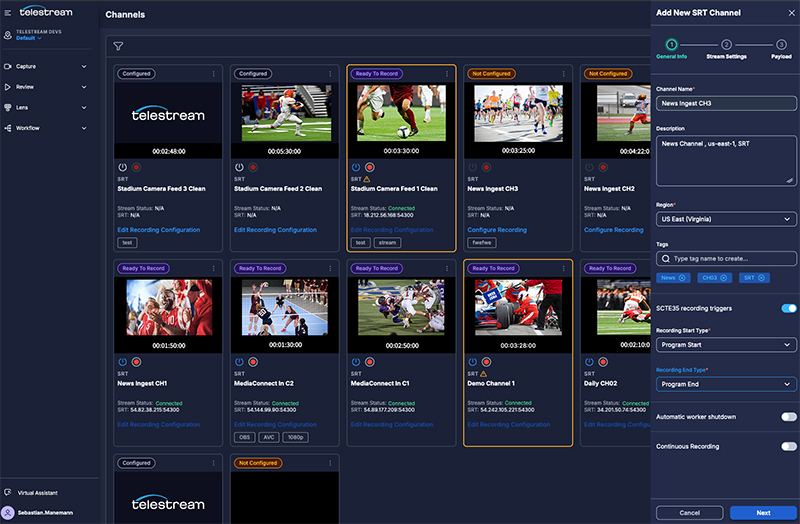
Telestream introduced UP as a modular cloud service stack for capture, review, workflow automation, and live monitoring, while also positioning it alongside EDC and Vantage Cloud as part of a broader ingest strategy.
Why it matters: Teams that standardize ingest and monitoring as a system can reduce "where is the latest file?" delays and recover faster when contributors, feeds, or formats change mid-project.
Sources: Telestream press release; Telestream UP product page.
If your delivery chain still depends on ad-hoc file passing, Tographer’s 1 Hour Virtual Consult can help map a cleaner ingest-to-edit path.

2) Firmware updates are now shipping workflow features, not just image tweaks
Leica’s SL3/SL3-S firmware 4.0 rollout adds camera-to-cloud support and expanded video options like open-gate and anamorphic de-squeeze workflows, signaling that camera software is increasingly judged by how quickly it moves projects through collaboration.
Why it matters: When firmware expands handoff and format flexibility, smaller creator teams can skip extra transcode and relay steps that previously required separate hardware or additional staff.
Sources: Leica firmware press release; CineD technical breakdown.
For teams trying to turn feature drops into repeatable process, Tographer’s One Day Content Creator Virtual Bootcamp is built around operational consistency, not just theory.
3) "Futureproof" now means network-ready camera ecosystems across studios and remote rigs
Ikegami’s NAB 2026 preview emphasizes shared network control architecture across UNICAM models and continued IP base-station workflows, framing interoperability as a practical requirement for broadcast-style production at any team size.
Why it matters: If your cameras and control layers behave consistently across studio, field, and robotic setups, scaling multi-cam production becomes an execution problem—not a constant reinvention problem.
Sources: Video Production News: Ikegami NAB preview; Ikegami broadcast systems overview.
If you’re standardizing camera/control behavior across projects, Tographer’s Content Creator Services can help convert that into a working production playbook.

What to Do Next
Pick one recurring production format this week and document it as a fixed chain: capture standard, ingest owner, review checkpoint, and final delivery target. The team that can run this chain predictably will publish more often with fewer fire drills.
From the Tographer
A Tographer breakdown relevant to production workflow and creator execution.